Why FlowRider Mixed Wave Sessions Waste Everyone's Time
FlowRider Mixed Wave sessions remove the lane divider, doubling bodyboard lines and leaving stand-up surfers about one turn an hour. What to do instead.
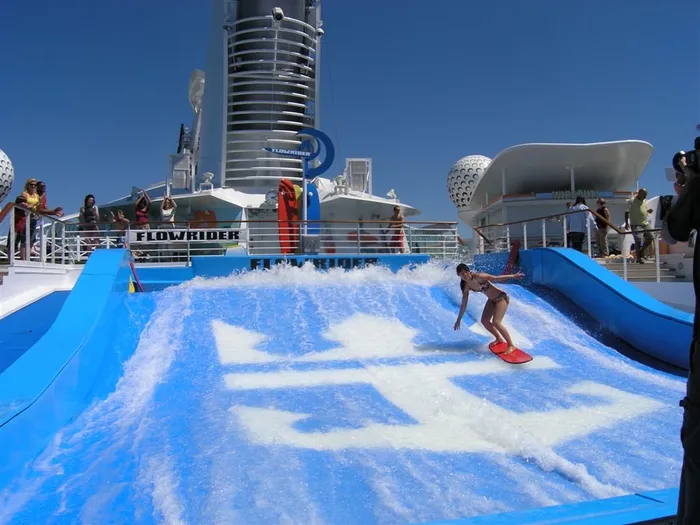
FlowRider "Mixed Wave" sessions on Royal Caribbean are a lose-lose. Removing the lane divider so bodyboarders and stand-up surfers can share the wave doubles the bodyboard line and leaves stand-up riders with about one turn an hour in a typical line. It's marketed as a compromise, but in practice it's a logistical mess that makes the FlowRider worse for everyone.
Why Mixed Wave Is a Lose-Lose
It cuts bodyboarding throughput in half
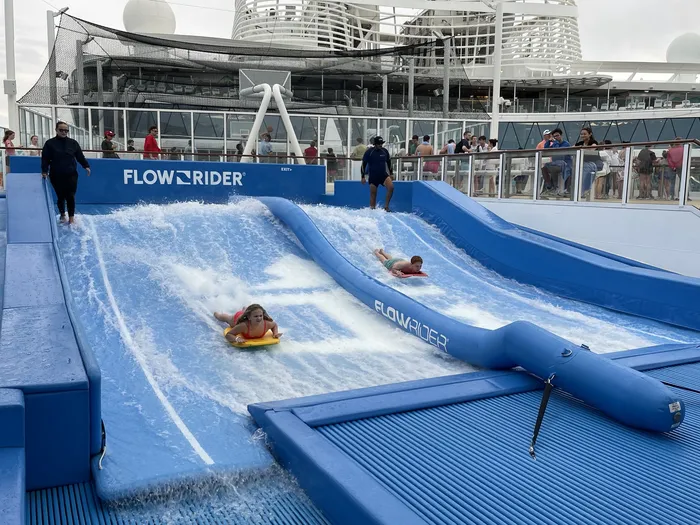
During dedicated bodyboard sessions, the FlowRider is split into two lanes with a barrier, so two people ride at the same time. That doubles throughput and keeps the line moving.
In Mixed Wave, the barrier comes out to make room for stand-up riders, so bodyboarders go one at a time. Everyone's wait instantly doubles. And most bodyboarders are kids who don't need the full wave anyway; bodyboarding isn't a precision sport where the extra width matters.
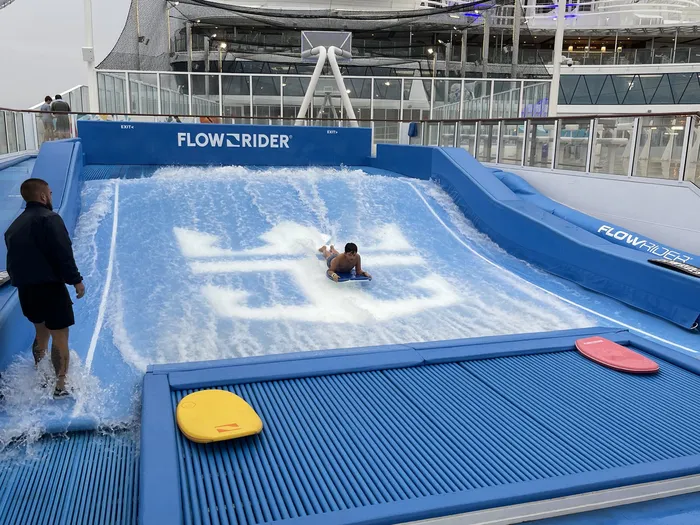
Stand-up riders barely get any wave time
Stand-up surfers get hit just as hard. In a typical Mixed Wave session, throughput is a painfully low 20 riders per hour in perfect conditions:
| Per rider | Time |
|---|---|
| Riding, including falls and recovery | about 2 minutes |
| Staff instruction | about 30 seconds |
| Transition between riders | about 30 seconds |
| Total | about 3 minutes |
Then add delays for people who forgot to take off their jewelry or just aren't ready. In a line of 15 people, you might get one turn an hour.
That's a terrible use of time, especially since advanced stand-up sessions only get 1-2 hours a day, while Mixed Wave and bodyboarding each take 3-4 hours. With these wait times, Mixed Wave isn't worth it for experienced stand-up riders at all.
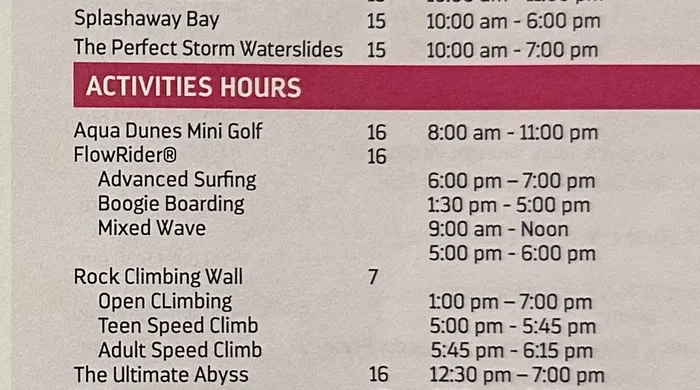
Here's a real day's FlowRider schedule from the Cruise Compass:
| Session | Time | Hours |
|---|---|---|
| Mixed Wave | 9:00 AM - noon and 5:00 PM - 6:00 PM | 4 |
| Boogie Boarding | 1:30 PM - 5:00 PM | 3.5 |
| Advanced Surfing | 6:00 PM - 7:00 PM | 1 |
Who Mixed Wave actually serves
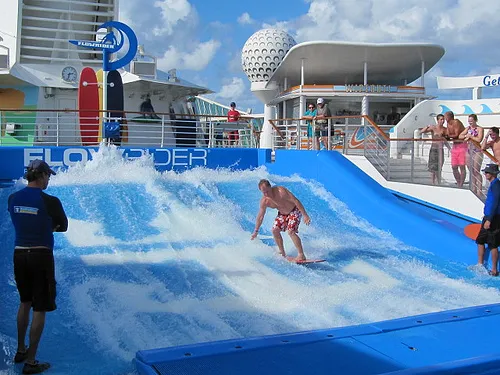
Only two small groups benefit:
- Bodyboarders who want the full wave. This is a tiny, selfish minority. Most bodyboarders are perfectly happy (and much faster) with the divided setup.
- New stand-up riders trying to qualify for the advanced stand-up session. This is the one semi-valid use case, but it doesn't require Mixed Wave. Allowing two qualifying attempts during the advanced session, or bringing back dedicated Self-Assist sessions, would solve it without hurting anyone else.
What Royal Caribbean Should Do Instead
Drop Mixed Wave sessions entirely:
- Bring back Self-Assist sessions so new stand-up riders can qualify without cutting into bodyboarding or experienced stand-up time.
- Let riders qualify during advanced sessions. Two quick attempts wouldn't slow down experienced riders, and it would remove the only real reason for Mixed Wave.
- Stick to dedicated sessions. Take the 4 hours that would have been Mixed Wave and turn them into 2 more hours of bodyboarding and 2 more hours of advanced stand-up.
Mixed Wave Is a Waste of Everyone's Time
Mixed Wave tries to please everyone and satisfies no one. It creates much longer lines, cuts wave time, and makes the FlowRider worse for both bodyboarders and stand-up surfers. Royal Caribbean could fix it with a simple schedule change: dedicated sessions for each group.
If you're getting into stand-up riding and thinking about your own board, start with my flowboard buying guide for beginners.
Want to see Mixed Wave removed? Let Royal Caribbean know in your post-cruise survey.
Frequently asked questions
- What is a Mixed Wave session on the FlowRider?
- It's a FlowRider session on Royal Caribbean ships where bodyboarders and stand-up surfers share the full wave, one rider at a time, instead of having separate sessions.
- Why are FlowRider lines so long during Mixed Wave?
- During bodyboard-only sessions a barrier splits the wave into two lanes so two people ride at once. Mixed Wave removes the barrier, so only one person rides at a time and the line moves half as fast.
- How many rides per hour does the FlowRider get in Mixed Wave?
- About 20 riders per hour in perfect conditions: roughly 2 minutes of riding, 30 seconds of instruction and 30 seconds of transition per rider. In a line of 15 people, that's about one turn an hour.
- Should stand-up riders go to Mixed Wave?
- Only if you're new and trying to qualify for the advanced stand-up session. Experienced stand-up riders get far more wave time in the advanced sessions.